Sharks are fascinating creatures and a great link to English language arts / literacy. It is always a great start to grab learners attention and make links between reading, writing and science. Here are some facts about sharks!

- Diverse Species: There are over 500 known species of sharks, ranging in size from the tiny dwarf lanternshark (measuring around 8 inches) to the massive whale shark (which can reach lengths of over 40 feet).
- Ancient Creatures: Sharks have been around for over 400 million years, making them older than dinosaurs.
- Varied Diets: Sharks are opportunistic feeders and their diets can vary widely depending on the species. While some sharks primarily feed on fish, others consume marine mammals, seabirds, or even plankton.
- Top Predators: Sharks are apex predators, meaning they are at the top of the food chain in their ecosystems and play a crucial role in maintaining the health of marine ecosystems.
- Extraordinary Senses: Sharks have a remarkable sense of smell, with some species able to detect a single drop of blood in an Olympic-sized swimming pool. They also have highly sensitive hearing and can detect low-frequency vibrations in the water.
- Electroreception: Many sharks have special organs called ampullae of Lorenzini that enable them to detect electrical fields produced by the muscles of their prey.
- Constant Movement: Most sharks must swim continuously to keep water flowing over their gills, as they rely on this process for oxygen uptake.
- Cold-Blooded: Sharks are ectothermic, meaning they rely on external sources of heat to regulate their body temperature.
- Reproduction: Shark reproduction varies among species, with some laying eggs (oviparous), others giving birth to live young (viviparous), and some species practicing a form of egg retention where eggs hatch inside the mother’s body (ovoviviparous).
- Long Lifespans: Some shark species have relatively long lifespans. For example, the Greenland shark is estimated to live for over 400 years, making it one of the longest-lived vertebrates on Earth.
- Sharkskin: Shark skin is covered in tiny tooth-like structures called dermal denticles, which help reduce drag and increase swimming efficiency.
- Camouflage: Some shark species have evolved camouflage patterns to help them blend into their surroundings, making them more effective predators.
- Migration: Many shark species undertake long-distance migrations, traveling thousands of miles between feeding and breeding grounds.
- Social Behavior: Contrary to popular belief, sharks are not solitary animals. Some species exhibit social behavior, forming loose aggregations or even complex social structures.
- Global Distribution: Sharks inhabit oceans all over the world, from the icy waters of the Arctic to the tropical reefs of the Indo-Pacific.
- Threats: Sharks face numerous threats from human activities, including overfishing, habitat destruction, pollution, and climate change. As a result, many shark species are now considered endangered or vulnerable.
- Misunderstood Creatures: Despite their fearsome reputation, the vast majority of shark species are not dangerous to humans. In fact, sharks kill far fewer people each year than other animals such as mosquitoes or dogs.
- Ecotourism: Shark ecotourism has become increasingly popular in recent years, offering people the opportunity to see these magnificent creatures in their natural habitat and raising awareness about the importance of shark conservation.
- Incredible Divers: Some shark species are capable of diving to extraordinary depths. For example, the bluntnose sixgill shark has been recorded at depths exceeding 8,000 feet.
- Research and Conservation: Scientists are continually studying sharks to better understand their biology, behavior, and ecological roles. Conservation efforts are also underway to protect shark populations and their habitats from further decline.
Click on the pictures to go to the resource.
Encourage your students to add to this list!
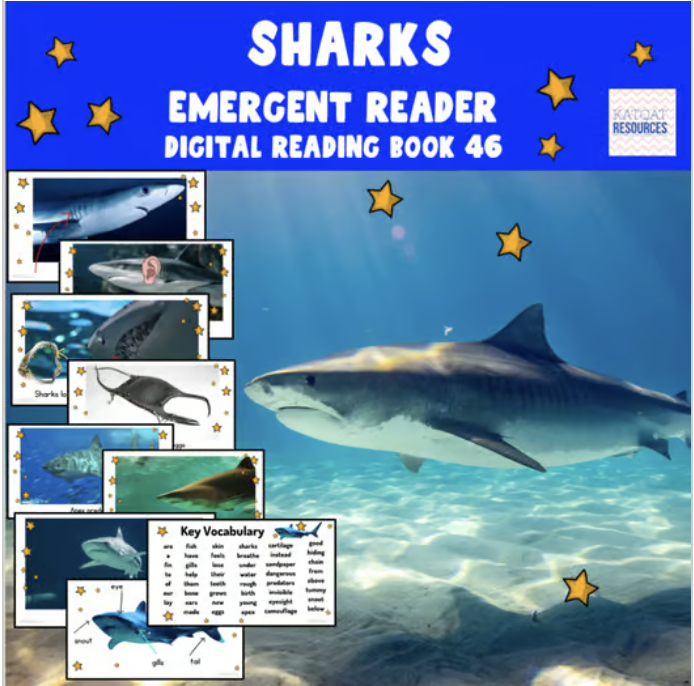
If you have emergent readers or need a powerpoint that is engaging to introduce the topic of sharks. Look no further!
 KatQat Resources
Leave a comment